Bedtime resistance in 3-year-olds: how to gently end the evening battles
Nightly battles over sleep with a three-year-old don't have to be your normal. Discover gentle, consistent ways to build a predictable routine, ease the resistance and settle into calmer bedtimes — without shouting or bribery.
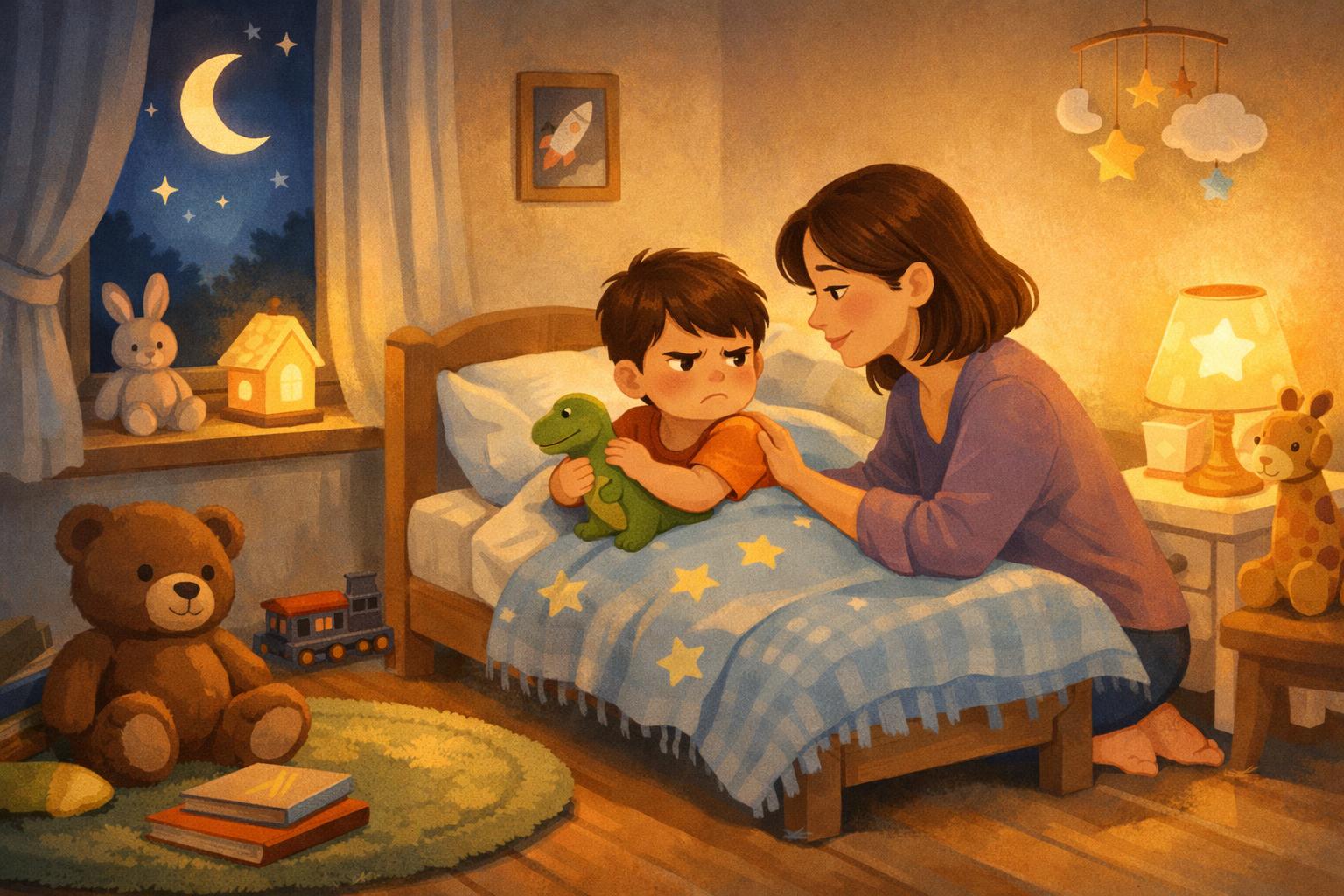
You know the feeling: bath done, pyjamas on, and yet the negotiations begin — worthy of a seasoned lawyer. One more story, one more sip of water, one more cuddle — and suddenly it's 9:30 p.m. and you're both wiped out. Bedtime resistance is a normal part of development in three-year-olds, not a sign you're doing something wrong. The good news is that with gentle, repeatable steps you can quieten those evening battles.
Why a three-year-old fights sleep
Behind the resistance there's almost always a real need, not "naughtiness". Most often it's:
- A need for control. A three-year-old is discovering their own will, and sleep is one of the few areas where they can say "no".
- Separation anxiety. Falling asleep means parting from you for the whole night — for a small child that's genuinely a lot.
- Overstimulation or overtiredness. Paradoxically, an overtired child has raised cortisol levels and finds it harder to wind down.
- Too early or too late. A bedtime that's too early meets a child who isn't physically sleepy yet; too late meets an irritable one.
When you see the resistance as a message ("I need closeness", "I need to decide", "I'm overstimulated"), it's easier to respond calmly instead of fighting.
Build a predictable bedtime routine
The most powerful tool is repetition. A child who knows what comes next feels safe and pushes back less. Set a short, fixed sequence of four to six steps and keep it in the same order every day, for example:
- Tidying up the toys (a signal: "the day is ending").
- Bath or wash.
- Pyjamas and teeth.
- Two picture books in bed.
- A cuddle, a lullaby, lights out.
The whole sequence should take 20–30 minutes and unfold at an increasingly calm pace, in dimmed light. A routine isn't a rigid checklist of chores — it's a gradual "coming down" from the energy of the day.
Offer choices instead of giving orders
Since a three-year-old is fighting for control, hand them a little of it, within safe limits. A limited choice satisfies the need to decide while still leading where you want to go:
- "Are we putting on the blue pyjamas or the green ones?"
- "Do you hop to the bathroom like a bunny or plod like a turtle?"
- "Shall we read about the tractor or the teddy bear?"
Avoid open questions like "Shall we go to sleep now?", because the natural answer is "no". Going to bed itself isn't up for negotiation — only the small details along the way are.
Respond to resistance calmly and consistently
When defiance, anger or tears appear, your child needs your calm, not another dose of tension. Name the feeling and hold the boundary:
"I know you don't want the fun to end. It's hard to stop when you're enjoying yourself. And now it's time to sleep — I'm right here with you."
That kind of sentence shows you understand while making clear the rule doesn't change. Your greatest ally here is predictability: if "one more story" sometimes works and sometimes doesn't, your child will test it every single time. Set one clear rule (e.g. "we read two books") and stick to it every evening.
When your child keeps getting out of bed
Leaving the room is one of the most common scenarios. The quiet, calm walk-back method works well:
- The first time, say briefly and warmly: "It's time to sleep, I'm nearby", and walk your child back to bed.
- On each further exit, cut the words down to almost nothing — no explanations, no lectures, no emotion, just calmly walk them back.
- Be consistent and patient: the monotony is deliberate and, over time, extinguishes the getting-up.
If the source is fear, a "safety anchor" helps: a favourite soft toy, a night light, or your t-shirt that smells of mum or dad tucked under the pillow.
Look after the whole day, not just the evening
A calm evening starts in the morning. Evening resistance is shaped by:
- The nap — too long or too late pushes sleepiness away; around age three many children shorten or drop naps.
- Screens — blue light and stimulating content in the hour or two before bed make it harder to wind down.
- Movement and daylight — plenty of activity and natural light during the day regulate the body clock.
- Dinner — a child who is fed but not overfed settles more easily; avoid sugar right before bed.
Be gentle with yourself
Change doesn't come in a single evening — apply the new routine consistently for at least two weeks before you judge the results. There will be better and worse nights, and that's normal. Your most important tool isn't a perfect technique but your calm, repeatable presence. A three-year-old doesn't need a parent who wins the bedtime battle — they need one who shows them that falling asleep is safe.