Potty training: when your child is ready and how to get through it without pressure
Potty training is a big milestone — and one of the most stressful for parents. See how to spot your child's readiness and how to move to the potty gently, without pressure or accident-dramas.
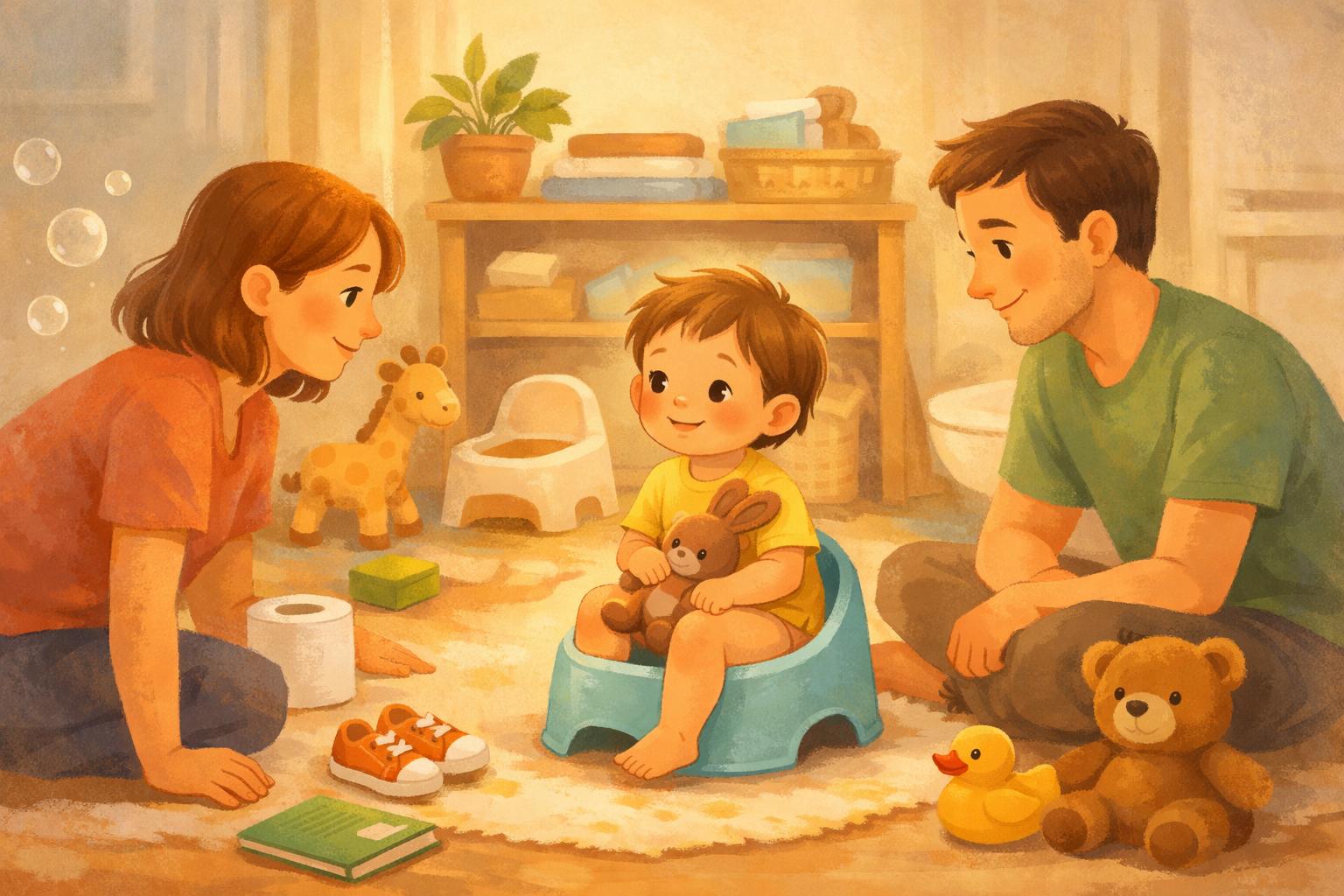
Friends boast that their child "is out of nappies already", and you wonder whether you're behind. Potty training stirs up a lot of emotion, and plenty of conflicting advice swirls around it. The most useful thing you can do is take your eyes off other people's children and the calendar and focus on this one, your own — because learning to use the potty works best when the child is genuinely ready.
Readiness matters more than age
Most children become ready for potty training between the second and third birthday, but the range is wide and completely normal. Starting by force, before a child is ready, usually drags the whole process out and adds stress for both sides. Instead of asking "how old are they", ask "are they ready".
Signs of readiness
They don't all have to appear at once, but the more you see, the better the moment:
- The nappy is sometimes dry for a longer stretch (e.g. after a nap) — bladder control is emerging.
- Your child signals a wee or a poo: with a word, a face, hiding in a corner.
- They're interested in the toilet and the potty and want to copy the household.
- They can follow simple instructions and hold on for a moment.
- They can pull trousers down and up and want to be independent.
- A wet or dirty nappy bothers them.
How to start
When you see readiness, approach the subject calmly and without great fanfare:
- Choose the potty together and let your child get used to it. Some find a toilet seat insert with a step easier.
- Set up regular opportunities: the potty after waking, before going out, after a meal, before bed — without forcing, on a "let's try" basis.
- Dress your child comfortably in things they can take off themselves.
- Praise the attempt, not just the result. Appreciating simply sitting on the potty motivates more than rewards for outcomes.
- Drop the daytime nappy once you feel it's working — children learn faster when they feel wet than in an absorbent nappy.
Accidents are part of learning
Wet trousers will happen — many times over. That's not a failure, just a normal stage of learning. Respond matter-of-factly and without anger: "No harm done, next time we'll make it to the potty, come and get changed". Criticism, expressions of disappointment or punishment for an accident can set the whole process back, because the child starts to tense up. A parent's calm is the best tool here.
Night-time is a separate story
Staying dry at night usually comes later than in the daytime — sometimes by months, even years — because it depends on the body maturing, something the child has no control over. Don't tie the two together. A nappy at night, while mornings are still sometimes wet, isn't a step back but common sense. Limit drinks just before bed and simply wait until the morning nappies start coming out dry.
When to ease off and try again later
If, despite honest attempts, your child resists, cries at the sight of the potty, "holds it" and constipation appears — that's a signal it's too early. There's nothing wrong with taking a break for a few weeks and coming back to it without tension. Potty training isn't a race or a grade for your parenting. Sooner or later every healthy child learns to use the toilet — and the less pressure along the way, the more gently you'll both get through it.