What to read at each age: choosing books from toddler to eight
The right book at the right age is less about reading level than about what a child can hold in their head. A practical guide to choosing, age by age.
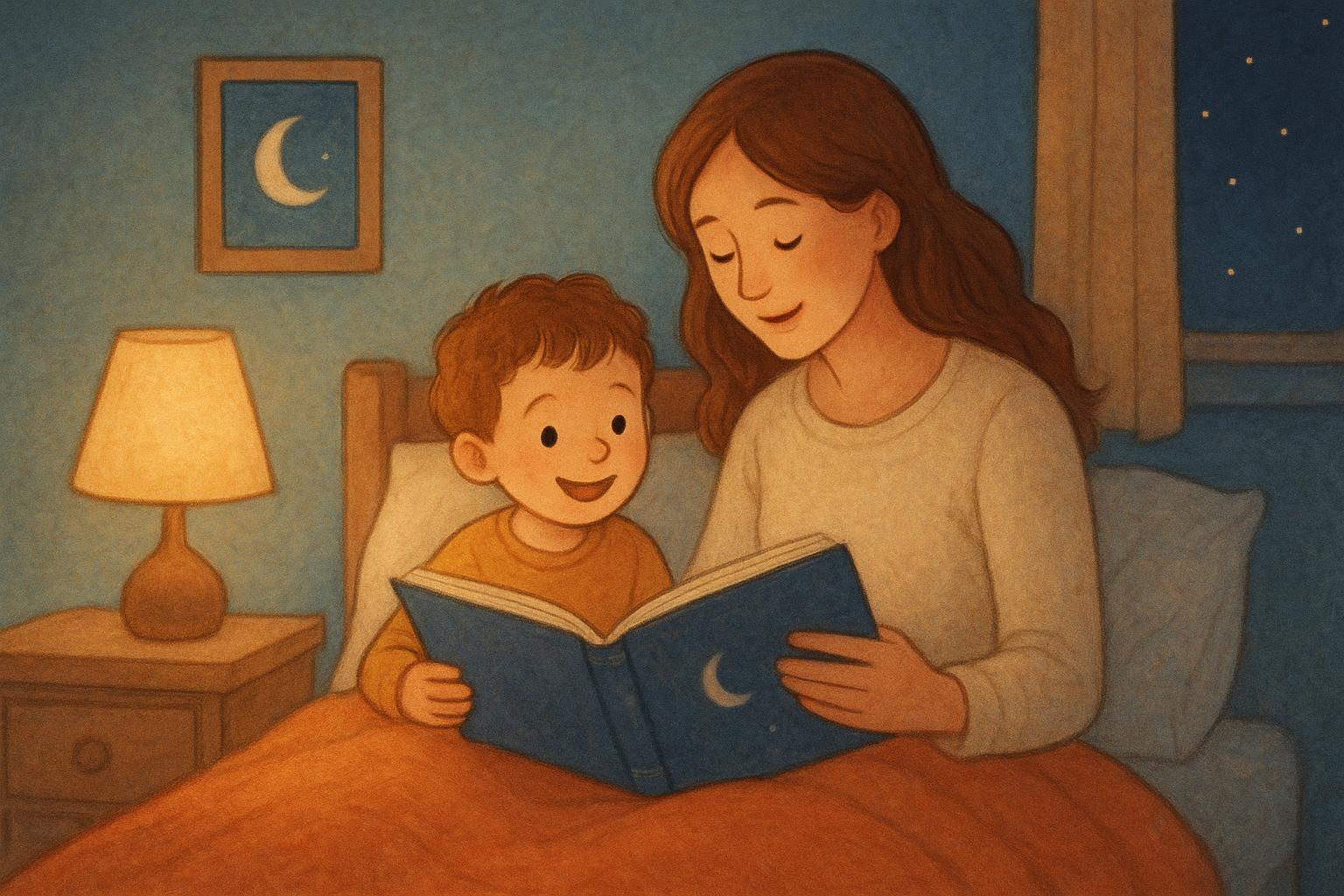
Standing in front of a shelf of children's books with no idea which one suits your four-year-old is an ordinary experience. Age labels on the back cover help less than they promise — they describe reading difficulty, not whether a child will sit through the thing.
The more useful question is what a child can hold in their head at a given stage: how much plot, how many characters, how long a stretch between pictures. Get that right and almost any book works.
Read above their level, not at it
The single most common mistake is choosing books a child could read alone. When you are the one reading, their limit is not decoding — it is comprehension, and comprehension runs years ahead of reading skill.
A six-year-old still sounding out simple readers can follow a chapter book read aloud without difficulty. Matching the book to what they can decode wastes the main advantage of reading together.
The one thing that genuinely has to match their stage is structure: how long the story runs before something happens, and how much they must remember from one page to the next.
What to read at each age
One to two. Rhyme, rhythm, and repetition. Board books with sound patterns matter more than plot here; the child is learning that language has shape. Expect to read the same six books indefinitely.
Two to three. Simple narrative with a clear sequence — first this, then that. Books about daily routines are useful because the child can map the words onto their own day.
Three to five. The widest range of anything on this list. A single plot with one problem and one solution, characters they can keep track of, and language well ahead of their own speech. Picture books written to be read aloud are at their best here.
Five to seven. Early chapter books read aloud, even while the child is still working through simple readers alone. Listening comprehension runs well ahead of reading ability at this age, so what you read to them can be considerably more complex than what they read themselves.
Seven to eight and beyond. Keep reading aloud, even after they read fluently. Longer books with chapters that end somewhere sensible, and subject matter worth talking about afterwards. This is the age when the habit is easiest to lose and most worth keeping.
Choosing in the shop or the library
A few shortcuts that beat reading the blurb:
- Read one page out loud, quietly, to yourself. If it is awkward in your mouth, it will be worse at bedtime. Books written for reading aloud have a rhythm you can feel immediately.
- Count the characters. More than three or four to keep track of is a lot for a preschooler.
- Check where the pictures stop. For under-fives, a long stretch of unbroken text is where attention goes.
- Let them choose one, you choose one. The one they picked gets read tonight; yours widens the range.
- Follow the obsession. A child deep into diggers will sit through a much harder book about diggers than an easier one about anything else.
When to abandon a book
If it is not landing after two evenings, stop. There is no benefit to finishing, and pushing through teaches a child that books are an obligation. Put it back on the shelf — quite often a book that failed at four works at five.
Equally, if your child wants the same story for the fortieth night in a row, read it. Repetition looks like a rut to an adult and is something quite different to a small child.
In short
Match the structure to your child's stage, keep the language ahead of it, and choose books that read well out loud. Beyond that, the strongest predictor of a child who loves books is simply having been read to often, by someone who was not making it feel like a lesson.