Sibling bedtime: how to read one story to a 3-year-old and a 7-year-old
Different ages, different attention spans, one evening. A workable structure for reading to siblings without boring one and losing the other.
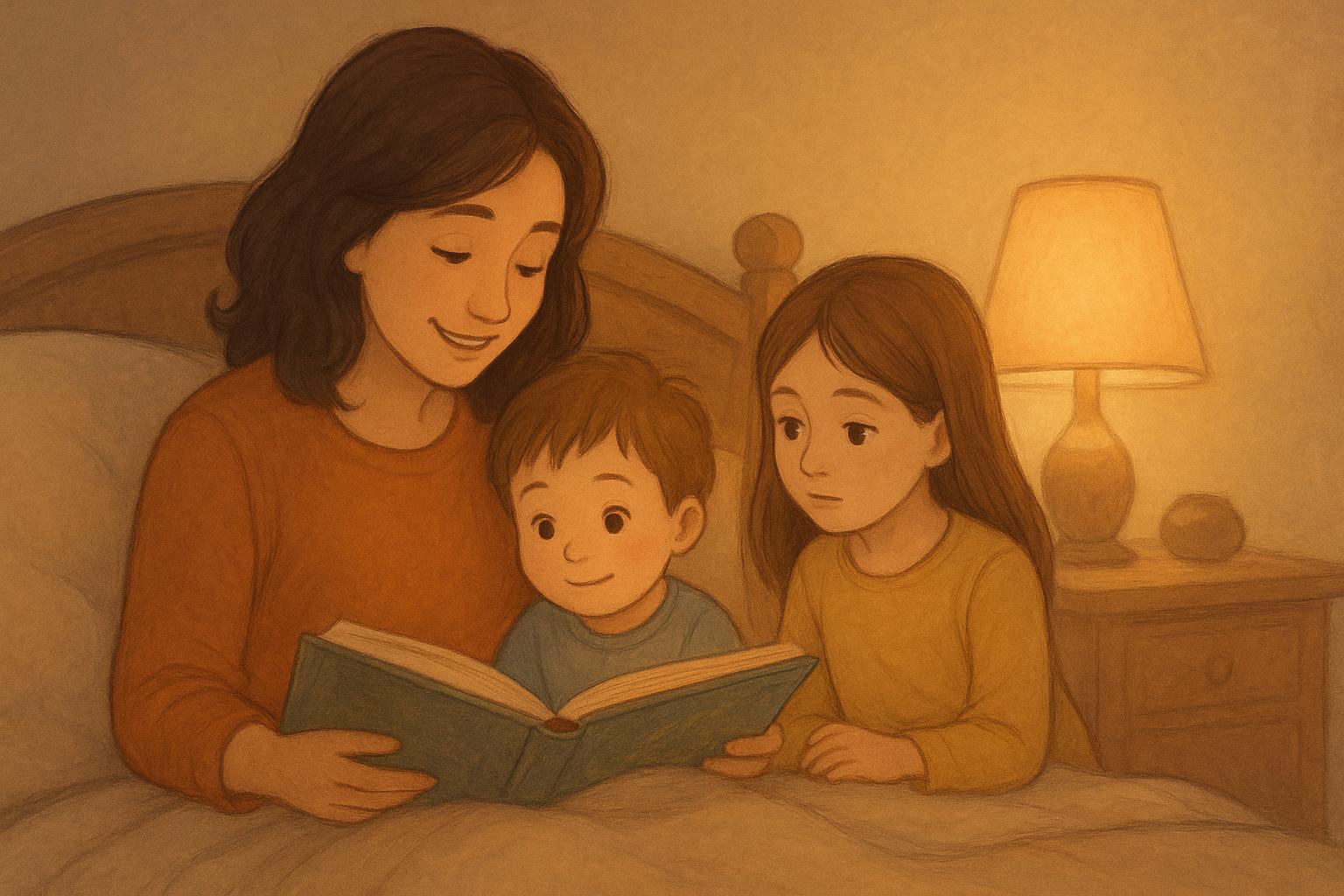
Reading to one child is straightforward. Reading to a three-year-old and a seven-year-old at the same time, in the same room, at the end of the same long day, is a different problem entirely.
The younger one cannot follow a chapter book. The older one is visibly insulted by a picture book. Split them up and bedtime doubles in length. Most families end up improvising something that works for a while and then stops working.
Here is a structure that holds up.
Start with the shared part
Begin with fifteen minutes everyone attends, and choose material that genuinely works across the gap. What qualifies:
- Picture books with layered humour. Books written to be read aloud by an adult often carry a second joke over the younger child's head.
- Illustrated non-fiction. Sharks, volcanoes, space, machines. A three-year-old takes the pictures, a seven-year-old takes the facts, and both are satisfied.
- Poetry and nonsense verse. Sound carries the younger child; wordplay carries the older one.
- Myths and folk tales. Strong plots, short chapters, and language that works at both ends.
Avoid anything where the younger child needs constant explanation to follow. If you are interrupting every page to catch someone up, it is the wrong book.
Then stagger
After the shared reading, the younger child goes to bed. The older one stays up — and that later slot becomes their reading time with you, at their level.
This does two things at once. It gives the older child a longer bedtime, which they experience as a genuine privilege, and it gives you a window for the more demanding book. It also means the younger child falls asleep in a quiet house rather than alongside a sibling who is not tired yet.
Twenty to thirty minutes of stagger is usually enough. Below fifteen it is not worth the trouble.
Make the roles real
Shared bedtimes go better when the older child has a job rather than an audience seat:
- Reader. Let them read a page or a whole short book to the younger one. It is genuine reading practice with an appreciative listener.
- Page-turner or voice. Assigning a character to voice keeps them engaged in a book that is below their level.
- Chooser. Alternate who picks the shared book, strictly and visibly. Most sibling friction at bedtime is about fairness, not content.
Be careful not to turn the older child into an assistant parent. The job should be fun and optional, not a responsibility they are held to.
Protect some one-on-one time
Shared bedtimes are efficient, but children talk differently when they are alone with you. The end of the day is when most things get mentioned — the argument at school, the worry, the question.
You do not need this every night. Once or twice a week each, ten minutes with the door closed and no sibling present, is enough to keep the channel open. Some families do it by rotating who gets the "long bedtime" on which night.
When it is not working
- The younger one keeps interrupting. Move them to the front of the sequence — story first, then straight to bed — so the shared part is shorter and the exit is immediate.
- The older one has checked out. The shared book is too young. Switch to illustrated non-fiction, which stretches further than fiction does.
- Bedtime is turning into a competition. Make the differences explicit and predictable: the older child has a later bedtime, the younger child gets picked up and carried. Named, consistent differences cause far less conflict than differences that appear to be improvised each night.
The takeaway
Do not aim for one bedtime that serves both children equally. Aim for a shared beginning that is genuinely enjoyable for both, then a staggered ending that gives each child something the other does not get. The structure does the work, and you stop negotiating it every night.