The three-minute bedtime story: a plan for nights when you have nothing left
Some evenings you have no energy for storytelling and no patience for a long picture book. Here is a short-form routine that still counts.
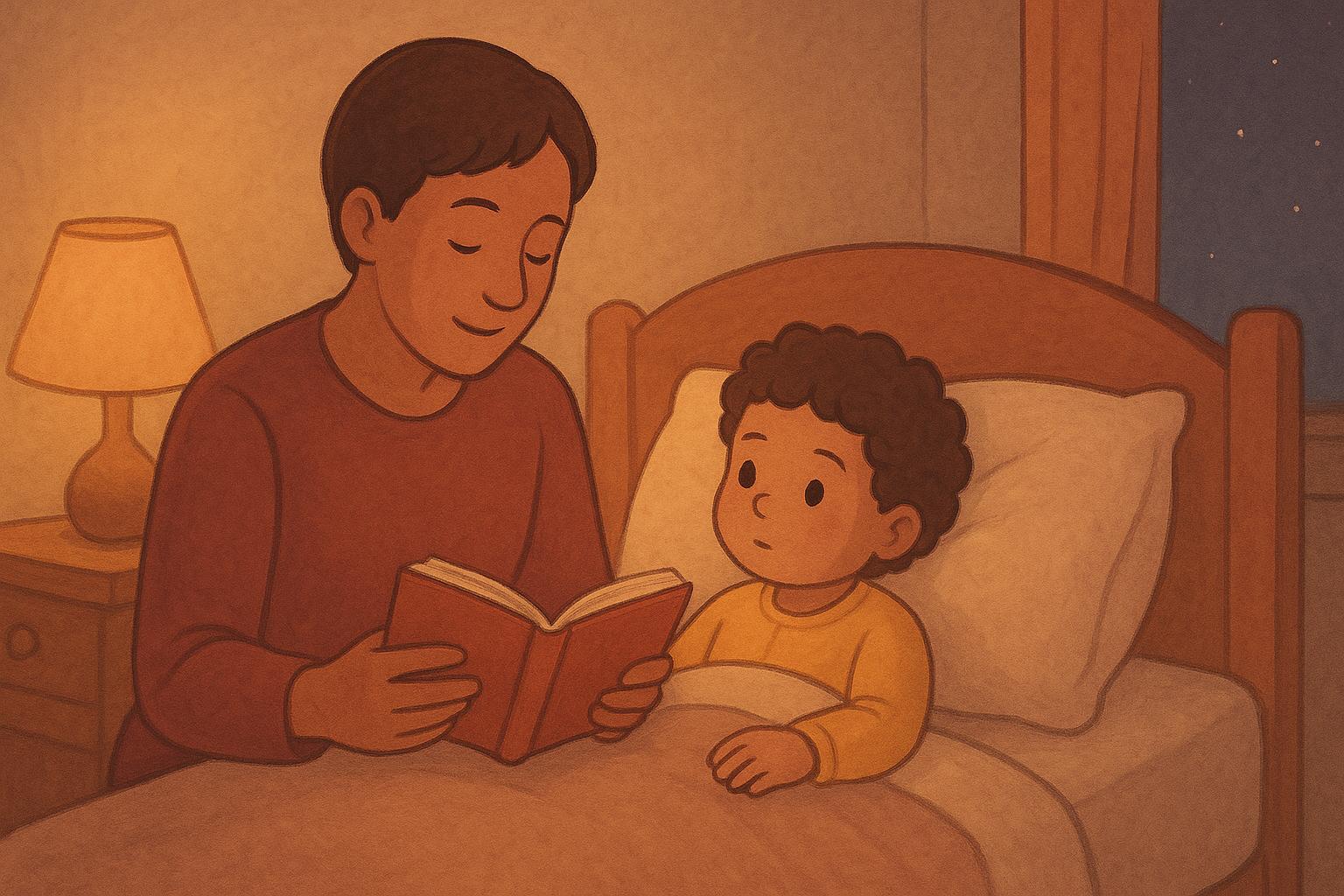
There are evenings when the twenty-minute bedtime routine is simply not going to happen. You are depleted, the day ran long, and the thought of a full picture book — let alone an invented adventure — is more than you can manage.
The instinct in those moments is to skip the story entirely and feel bad about it. There is a better option: make it short on purpose. A deliberate three-minute story does most of what a long one does, and it does it without costing you what you do not have.
Why short still works
The benefits of a bedtime story come mostly from three things: your voice, physical closeness, and a predictable ending to the day. None of them require length.
What a long story adds is more language exposure and more plot — valuable, but not the part that settles a child. A short, calm story delivered every night beats a long one delivered when you can face it. Consistency is the active ingredient.
The three-minute structure
Roughly thirty seconds each for the first two beats, ninety for the middle, thirty to close:
- Where we are. One or two sentences of setting. "It was late, and the fox was the only one still awake in the whole burrow."
- One small thing happens. Not an adventure — an event. Something is lost, something knocks, someone cannot sleep.
- It is dealt with. Simply. No twist, no third act.
- Everyone settles. The character goes to bed. You lower your voice for this part.
That is it. Resist the pull to make it more interesting; on these nights, uneventful is the feature.
Openings you can reuse forever
Keep three or four of these in your head so you never start from a blank page:
- "This is a small story about a very sleepy…"
- "Once, on a night exactly like this one…"
- "There was a [animal] who could not find their [thing]."
- "Do you remember the [animal] from yesterday? Something happened."
The last one is the most efficient of all. Reusing yesterday's character means no world-building at all — just one new small event in a place you both already know.
Other short-form options that count
If even three minutes of invention is beyond you tonight:
- Read one page slowly. Announce it in advance: "one page, and we do the rest tomorrow." Slow reading of a little beats rushed reading of a lot.
- Tell today backwards. Walk through the day in reverse, ending at breakfast. It is calming, it needs no imagination, and children find it oddly fascinating.
- Describe tomorrow. A quiet walk-through of the next day's sequence. Especially good for children who resist sleep because they are uncertain about what comes next.
- The same story you told last night. Word for word if you can. Repetition is not a failure of effort; young children actively prefer it.
Protecting the routine on hard days
- Decide before you start. Saying "one short story tonight" up front prevents the negotiation that happens when a child senses the ending is negotiable.
- Keep the closing ritual intact. Whatever your final line and last kiss are, do not drop them. The ending signals more than the content does.
- Do not apologise for a short story. If you frame it as a lesser version, your child will experience it as one.
The point
A bedtime story is not a performance you owe your child. It is a few minutes of your voice at the end of the day, in a shape they can predict. On good nights, make it long. On the nights when you have nothing left, make it three minutes — and let that be enough, because it genuinely is.