Speech development between ages one and three: what to expect and how to support it
From first words to full sentences — speech development between the first and third birthday is huge and very individual. See what's typical, when it's worth checking in and how to support talking every day.
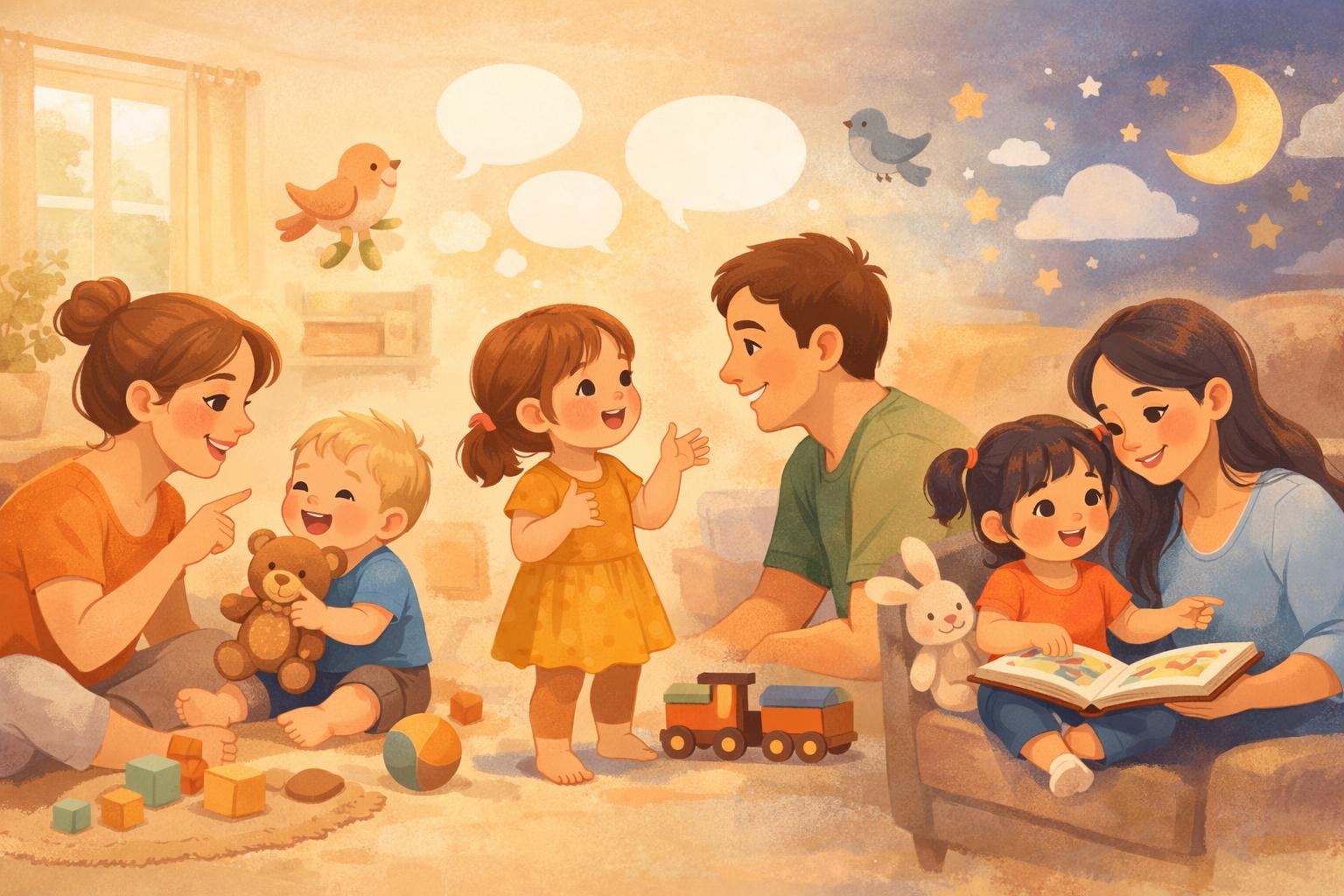
"When will they finally start talking?" is one of the most common questions parents of small children ask. Between the first and third birthday, a child travels from a few syllables to simple sentences — but the pace of that journey varies a lot. One two-year-old chatters non-stop, another says little and is still developing perfectly well. It helps to know what's typical and how to support speech day to day.
Rough stages of speech development
The milestones below are a reference point, not a rigid timetable. Children reach them at different rates.
- Around 12 months — first deliberate words ("mama", "dada", "num-num"), understanding of simple instructions and responding to their own name.
- 12–18 months — a vocabulary of a handful to a dozen or so words, lots of pointing, imitating sounds and intonation.
- Around age 2 — usually at least a few dozen words and first two-word phrases ("give drink", "mama eat").
- Ages 2–3 — a rapid jump in vocabulary, longer sentences, "what's that?" and "why?" questions; speech becomes clearer, though still with errors.
Remember that understanding comes before speaking. A child who still says little but understands instructions, points to objects and communicates eagerly (with gestures, sounds, eye contact) is usually developing well.
Everyday ways to support talking
The best speech "therapy" is ordinary, warm conversation woven into the day:
- Talk about what you're doing. "We're washing our hands, warm water is pouring out." Naming actions builds vocabulary.
- Expand your child's utterances. When they say "car", reply "yes, a red car is driving".
- Read every day. Looking at and naming pictures together is one of the most effective tools.
- Sing and repeat nursery rhymes. Rhythm and repetition make words easier to remember.
- Give time to answer. Don't jump in straight away — a short pause encourages your child to try.
- Limit screens. Speech develops through interaction with a person, not a screen.
You don't have to correct every mistake. Instead of "that's not how you say it", simply repeat the sentence correctly — your child hears the right pattern without any sense of failure.
Bilingualism doesn't delay speech
If two languages are spoken at home, your child may mix words for a while or seem "behind" in one of them. That's normal and temporary — bilingualism doesn't harm speech development. What counts is the total number of words across both languages, not in each one separately.
When it's worth seeing a specialist
It's worth talking to your paediatrician or a speech and language therapist if you notice your child:
- says no words and doesn't point around 18 months,
- isn't trying to combine two words around age 2,
- doesn't respond to their name or to simple instructions,
- has lost skills they previously had (stopped talking, waving, making eye contact),
- is very frustrated because they can't make themselves understood.
An early consultation isn't cause for panic — it often ends in reassurance, and if support is needed, the earlier it starts, the easier it is to help. It's also worth checking hearing, as recurrent ear infections can temporarily get in the way of speech development.
Above all: talk and play
A child learns to talk because they want to connect with you. Every shared game, named picture, repeated rhyme and patiently heard attempt is a building block in the process. Rather than counting words, enjoy the conversation — and speech will come in its own time.