A preschooler's fears: the dark, monsters and separation anxiety
A sudden fear of the dark, monsters under the bed or crying at goodbye is a normal part of development in a preschooler. See where these fears come from and how to support your child without mocking or feeding them.
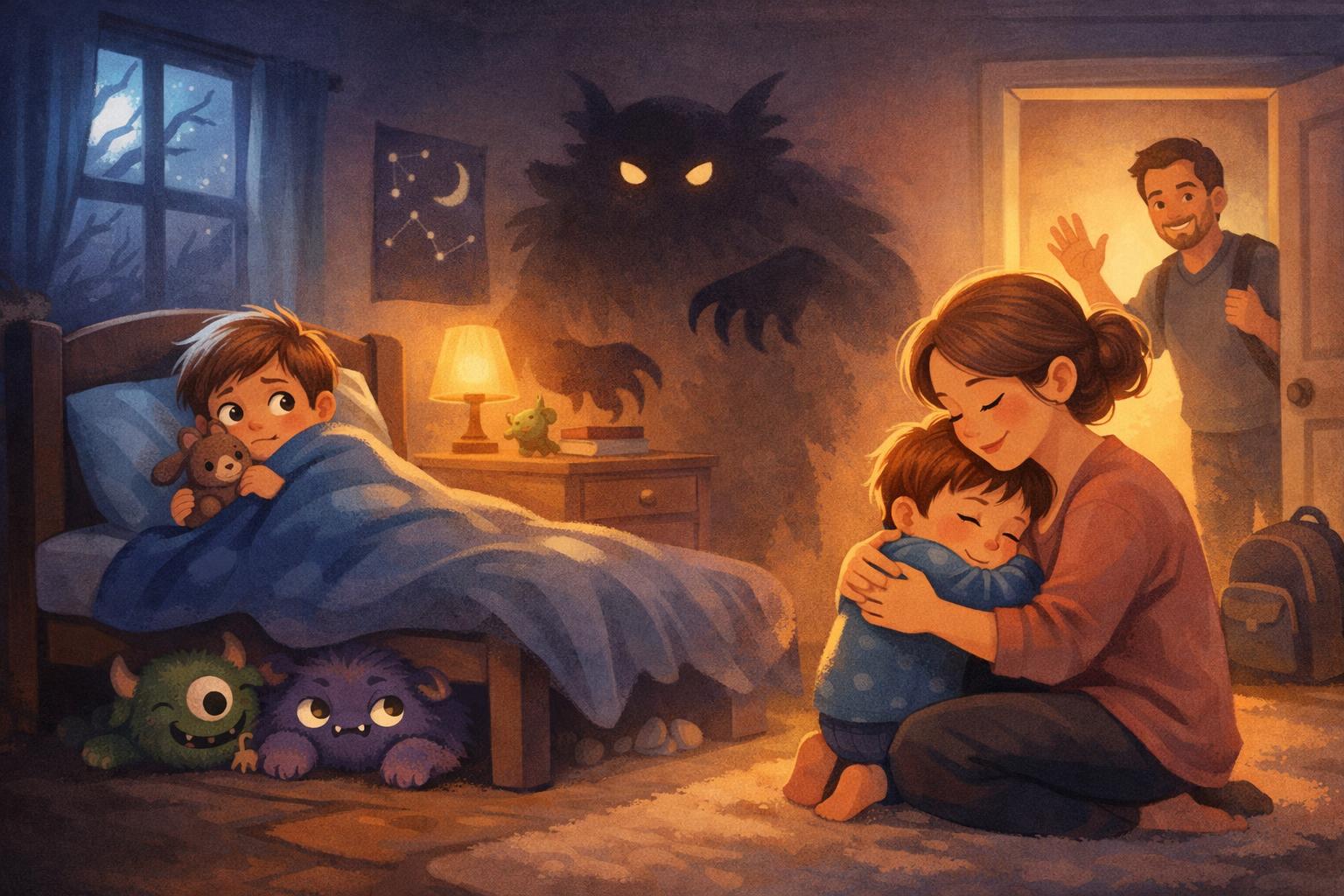
Your previously brave child suddenly won't sleep with the light off, checks for a monster under the bed and despairs when you leave the room. Where does this fear come from, when everything was fine until recently? Fears in the preschool years aren't a step back or a sign you missed something — they're a natural side effect of development. A growing imagination can create not only wonderful games but also terrifying scenarios.
Why now
Between the ages of three and six, a child makes an enormous leap in thinking. They begin to understand that something like danger exists in the world, but they can't yet tell a real threat from a product of imagination. On top of this comes "magical" thinking: the shadow on the wall really could be a monster, and a fairy-tale character could be lurking in the wardrobe. This isn't exaggeration or manipulation. To the child, these fears are completely real.
The most common fears and what lies behind them
- The dark — it's not the light that disappears, but control; imagination fills the gloom with what can't be seen.
- Monsters, ghosts — a concrete "face" given to a nameless unease.
- Separation from a parent — the fear that something bad might happen while you're gone.
- Loud noises, storms, the vacuum cleaner — a lack of any sense of control over what's sudden and noisy.
- Doctors, water, costumes — new, unpredictable situations.
What to avoid
With the best intentions, it's easy to react in a way that feeds the fear:
- Don't mock or dismiss. "There's nothing to be afraid of", "such a big boy" — the child hears that their feelings are silly and is left alone with the fear.
- Don't force it. Throwing them into cold water or turning off the light despite the crying usually cements the fear rather than curing it.
- Don't feed the fear with detail. A long explanation of "why monsters don't exist" can, paradoxically, make them more real.
How to help your child
The goal isn't to remove the fear overnight, but to give your child the sense that they're not alone with it and that they can cope:
- Acknowledge the feeling. "You're scared of the dark. I understand, the dark can be scary. I'm here." This is the first and most important step.
- Give a sense of control. A night light, a "monster" torch, an open door, a favourite soft toy on guard — small things that hand agency back to the child.
- Use play. "Monster spray" (a bottle of water), checking the wardrobe together, drawing the fear and "throwing it away" — play tames fear better than logic.
- Approach gradually. Move towards a difficult situation in small steps, at the child's pace, always with your support beside them.
- Keep a predictable routine. A steady, calm evening and clear goodbyes build the sense of safety that quietens fear.
Watch yourself too
Children are keen observers. If you tense up at the sight of a dog, a storm or a spider, your child will quickly "borrow" that reaction. You don't have to pretend to be fearless — it's enough to show that fear can be handled: "I'm a bit scared of the storm, so let's sit together and count how far away it is".
When to see a specialist
Passing fears are normal and usually fade with age. It's worth seeking support if the fear is very strong and persistent, clearly limits your child's life (they won't go out, sleep or eat), comes in panic attacks, or intensified suddenly after a difficult event. A child psychologist can help both your child and you find ways to tame the fear.
The bottom line
A child who is afraid of the dark isn't "cowardly" — they're a perfectly normal preschooler with a vivid imagination. Your calm presence, acknowledgement of feelings and small tools that give a sense of control are the best things you can offer. In time the fears will pass, and your child will remember that when they were afraid, you were right there.